Greyhound Racing Trainers
 Available in US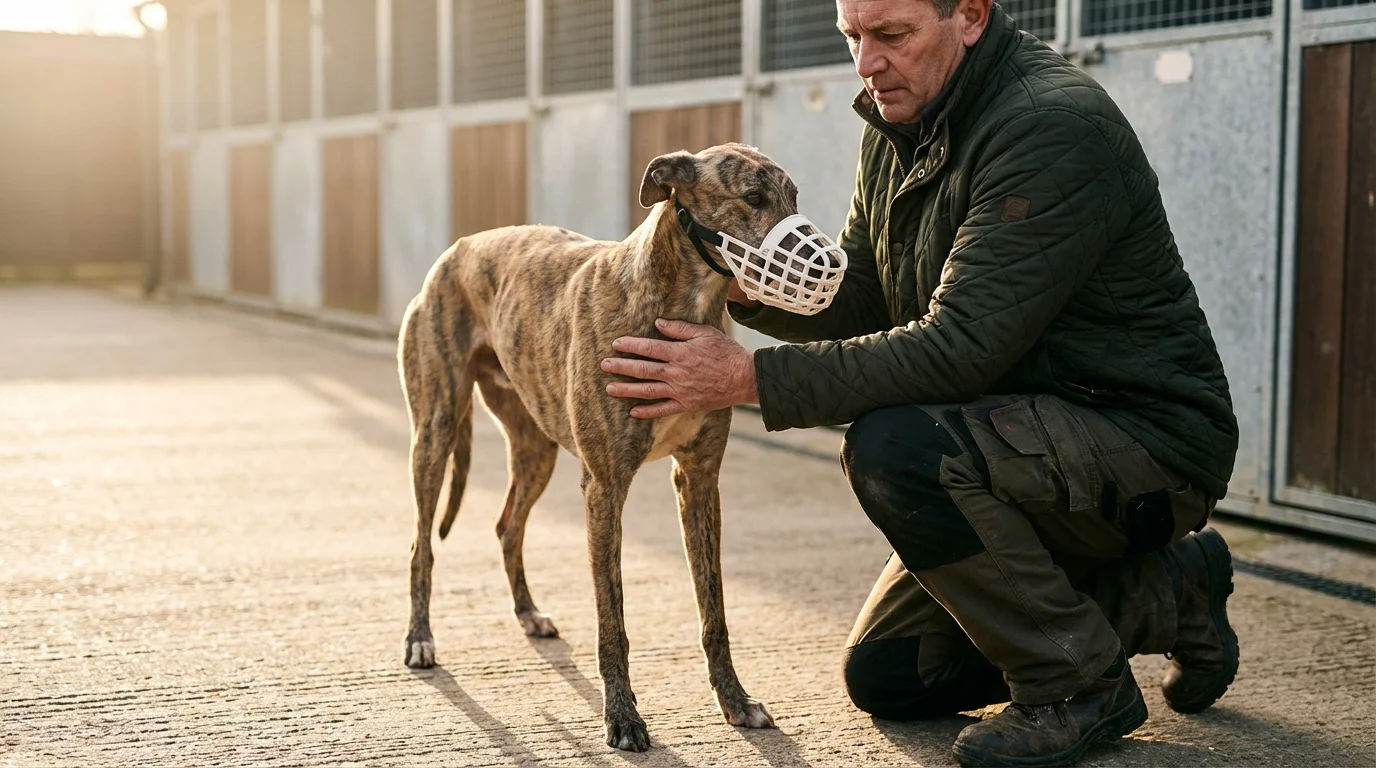
The Trainer’s Name Is on the Racecard for a Reason
Behind every fast dog is a trainer who got the preparation right. The trainer’s name sits on every UK greyhound racecard, listed alongside the dog’s form, trap draw, and weight. Most bettors glance at it and move on, treating it as administrative information rather than a form variable. That’s a mistake. In greyhound racing, the trainer is the single most influential human in the process — the person who decides when a dog races, where it races, at what distance, and in what condition it arrives at the track.
Unlike horse racing, where the trainer’s reputation is a central part of the betting narrative — everyone knows the top yards, the big names, the patterns around festival meetings — greyhound trainers operate with far less public scrutiny. There are no pre-race interviews, no high-profile training gallops broadcast on television, and no racing press dissecting kennel moves. The information is there, in the data, but few bettors look for it. That gap between available information and actual usage is precisely where an edge can exist.
A dog’s form tells you what it’s done. The trainer’s record tells you the context in which it was asked to do it — and hints at what it might be asked to do next.
What a Greyhound Trainer Actually Does
Feeding, trialling, placing — the trainer controls every variable except the race itself. The role of a greyhound trainer in the UK is comprehensive. From the moment a dog enters the kennel until it walks into the traps, the trainer is responsible for its physical condition, its mental state, and the strategic decisions around its racing career.
Day to day, the trainer manages feeding and nutrition. Greyhounds are high-performance athletes, and their diet is calibrated for energy, muscle maintenance, and race-day weight. The trainer adjusts food intake based on the dog’s racing schedule, its recovery between runs, and its target weight. A dog that weighs in heavy on race day reflects a training decision — sometimes deliberate, sometimes not — and the trainer’s feeding regime is the primary factor.
Training and trialling are the other daily responsibilities. Between races, the trainer exercises the dog, maintains its fitness, and may arrange unofficial trials at the track to assess readiness. These trials aren’t published in the way race results are, which means the trainer has access to information about the dog’s current form that the betting public doesn’t. A dog that trialled well mid-week — posting a fast time over the race distance — might run on Saturday with a confidence the racecard can’t express. The trainer knows; you don’t.
The placement decision is where the trainer’s influence becomes most directly relevant to bettors. The trainer chooses which races to enter the dog in — the track, the distance, the grade. A dog that’s been running over 480 metres and suddenly appears on a 680-metre stayers’ card didn’t make that decision itself. The trainer saw something — stamina the dog hasn’t been asked to use, a favourable field at the longer distance, or a tactical reason to avoid the standard-distance competition. Similarly, a trainer who switches a dog from one track to another is making a deliberate placement. Track switches can exploit different trap biases, different grading systems, or simply a softer field at the new venue.
The trainer also decides when a dog doesn’t race. Withdrawals, rest periods, and the spacing between runs are all trainer decisions. A dog that hasn’t raced for three weeks might be injured, or it might be freshened up deliberately for a target race. The trainer’s intent behind the absence shapes the dog’s readiness in a way that the form gap alone doesn’t reveal.
Trainer Statistics and Strike Rates
Win rates by track, by distance, by grade — trainer data is freely available and underused. The Racing Post, GBGB records, and specialist greyhound form services all publish trainer statistics. These include overall win rates, track-specific records, and performance by distance and grade. The data is there for anyone who looks, and it tells stories that individual dog form sometimes misses.
A trainer with a 25% win rate at a specific track, when the average across all trainers at that venue is 16%, has a meaningful edge at that track. That edge might come from familiarity with the surface, a kennel conveniently close to the track that reduces travel stress, or simply years of experience placing the right dogs in the right races at that venue. Whatever the cause, the statistical output is real and it applies to every runner from that kennel.
Distance-specific trainer data is equally revealing. Some trainers specialise in sprint dogs. Others build their kennel around stayers. A trainer whose sprint runners consistently outperform at 270 metres but underperform at 480 metres is telling you something about their training methods, their dog selection, and possibly the type of greyhound they prefer to work with. When a dog from a sprint-specialist kennel appears in a standard-distance race, the trainer’s track record at that distance should temper your expectations — regardless of the individual dog’s form.
Grade-level performance is another dimension. Certain trainers excel with lower-graded dogs — the A5 through A8 ranks where margins are tight and preparation counts for more than raw talent. Other trainers dominate at the top end, producing A1 dogs and open-race contenders year after year. Understanding where a trainer’s strengths lie helps you assess whether a dog running in a specific grade is being trained by someone with a record of success at that level.
The most practical use of trainer data is as a cross-reference. After you’ve assessed a dog’s form and the race conditions, check the trainer’s record at the track and distance. If the trainer’s numbers support your selection — strong win rate, good record with this type of dog — it’s a confirming signal. If the trainer’s record at this venue is poor despite having decent dogs, that’s a caution flag worth noting.
Trainer Patterns That Signal Betting Opportunities
A trainer moving a dog to a new track or distance is almost always deliberate. Greyhound trainers don’t make random decisions about placement. When a pattern emerges in a trainer’s behaviour — a consistent approach to how and when they deploy their dogs — that pattern becomes a betting signal if you can read it.
The most common actionable pattern is the track switch. When a trainer moves a dog from its home track to an away venue, there’s a reason. Sometimes the reason is simply that the dog has been upgraded at its home track and the trainer wants easier competition elsewhere. Sometimes it’s that the away track’s geometry suits the dog’s running style better — wider bends for a dog that runs wide, or shorter straights for a front-runner. The switch itself is the signal. A trainer who consistently wins with dogs on their first run at a new track is exploiting the grading advantage that comes with the move. The away track’s racing manager often assigns a conservative grade to visiting dogs, putting them in weaker company than they’d face at home.
Distance changes are another pattern worth tracking. A dog that’s been running 480 metres and is suddenly entered over 680 metres has been assessed by its trainer as having staying ability. That assessment is based on training and trialling that you haven’t seen. If the trainer has a strong record with stayers — particularly at this specific track — the distance switch is a positive signal rather than a speculative one.
Return-from-absence patterns are particularly useful. Some trainers are known for bringing dogs back sharply after a break — the first run back is competitive, and the dog is expected to perform. Others use the first run after a layoff as a fitness exercise, not expecting a peak performance until the second or third run back. Knowing which approach a specific trainer takes helps you decide whether to back or avoid a dog on its return. The trainer’s historical pattern with returning dogs — available in the form database — is the best guide.
Kennel form is a broader pattern that captures the trainer’s overall current performance. If a trainer’s runners have been winning at above their usual rate over the past two weeks, something in the kennel is working. Dogs from in-form kennels carry a collective tailwind that individual form figures don’t always reflect. Conversely, a kennel going through a cold spell — otherwise good dogs underperforming across the board — may indicate a temporary issue with training conditions, health, or simply a bad run of luck that hasn’t yet corrected.
The Trainer Is the Signal You’re Not Watching
The dog runs. The trainer decides when, where, and how ready it is. That hierarchy matters because it means every racecard entry is a trainer decision first and a form question second. The dog didn’t choose to race tonight at this track over this distance. The trainer made that choice, based on information and experience that the public form record only partially captures.
Adding trainer analysis to your pre-race process doesn’t take long. A quick check of the trainer’s recent record, their stats at the relevant track, and any pattern in their placement decisions takes two minutes per race. Over the course of a meeting, that’s an additional 20 to 25 minutes of work. The returns — a clearer picture of why each dog is in this race, and whether the trainer’s intent aligns with your form assessment — are worth considerably more than the time invested.
Most bettors ignore the trainer line on the racecard. The ones who don’t are working with an extra layer of information that the market hasn’t fully priced in. In a sport where margins are small and edges are hard to find, an underused data source is exactly where you should be looking.
